
The Cleveland County District Court Clerk
The official page identifies Marilyn Williams as the Cleveland County District Court Clerk. The Court Clerk is an elected constitutional officer with a four-year term. The office records and preserves the state records of the District Courts in the county's judicial district. Its primary job is to record, file, and maintain the permanent records of District Court proceedings.
The office also collects court costs and filing fees, which fund the Court Fund that operates the District Courts. The clerk follows forms and procedures set by the Court Administrator's Office, the Oklahoma Supreme Court, and the State Auditor and Inspector. So the office is both a record keeper and a financial office for the courts.
It helps to know what the office can and cannot do. The clerk can hand you forms, accept filings, take fees, and give certified copies of documents in the file. The clerk cannot give legal advice, tell you what to file, predict an outcome, or fill out your forms for you. Staff also cannot produce a transcript, since that comes from the court reporter. Keeping those limits in mind sets the right expectations before you call or visit.
Court Clerk Divisions
The Court Clerk's work is split into divisions, each handling a group of cases. Knowing the division helps you describe what you need.
- Appeals - appellate matters routed from the District Court.
- Civil - lawsuits, judgments, and related filings.
- Criminal - felony and misdemeanor cases and cost administration.
- Juvenile - juvenile matters, with limited public access.
- Domestic Relations - marriage, divorce, paternity, probate, guardianship, and more.
- Small Claims - claims under $10,000, evictions, and licensing.
Domestic Relations is broad. It covers marriages, divorces, separations, annulments, emergency protective orders, income assignments, paternity, probate, guardianship, mental health, and adoption. Small Claims is broad too, handling claims under $10,000, garnishments, recovery of property, evictions, marriage licenses, minister credentials, and private process-server licensing. For court searches, see court records.
How to Request a Certified Copy
A certified copy is the official version a court or agency will accept. The Court Clerk fills requests by mail, by email, or in person. Certified copies cannot be emailed, so plan for mail or pickup when you need a certified document.
- Find the case on OSCN and note the case number and type.
- Complete the Court Clerk Request for Records form.
- List the parties, the document titles, and the dates you need.
- Mark whether you need certified copies and how you want them delivered.
- Submit by mail, email, or in person, and pay the confirmed fee.
The office confirms the fee due before it fills a mailed or emailed request, and it completes requests within 10 business days after payment. So you do not have to guess the exact charge in advance, though a mailed request can include payment for known copy costs.
There is one shortcut worth knowing. Some docket entries on OSCN say a document is available at the Court Clerk's office, and the clerk can email those ordinary copies free upon request. That free email option does not apply to certified copies, and a large or bulk request may carry a fee. So for a quick read of one document, ask about the free email, and for an official copy, plan on the certified process.
Records Request Form Fields
The Court Clerk Request for Records form is one combined form for case-record copies and marriage-license copies. The top covers the case, the middle covers marriage records, and the bottom covers the requester and delivery choices.
| Field | Required | Notes |
|---|---|---|
| Case Type | By context | Civil; Family & Domestic; Small Claims/Licensing; Criminal. |
| Case Number / Year Filed | Optional | Helps locate the file. |
| Parties Named | By context | Party names, plus any alias. |
| Title of Documents | By context | The filings or orders you want. |
| Marriage fields | Marriage requests | Date of marriage and applicant or bride and groom names. |
| Requestor Name / Email | Required | Email is needed for a response. |
| Certified? / Emailed? | Required | Certified copies cannot be emailed. |
Mailed requests should include a self-addressed envelope when you send payment for copies.
Court Clerk Fees and Payment
Copy fees are set by state law and apply to most case types. Payment is by check, money order, or in-person credit card. The Civil division page is a good example of where filings and related packets are handled.
| Item | Fee |
|---|---|
| Copy, first page | $1.00 |
| Copy, each added page | $0.50 |
| Certification of each document | $0.50 |
| Certified marriage license | $2.00 |
| Authentication certificate | $5.00 |
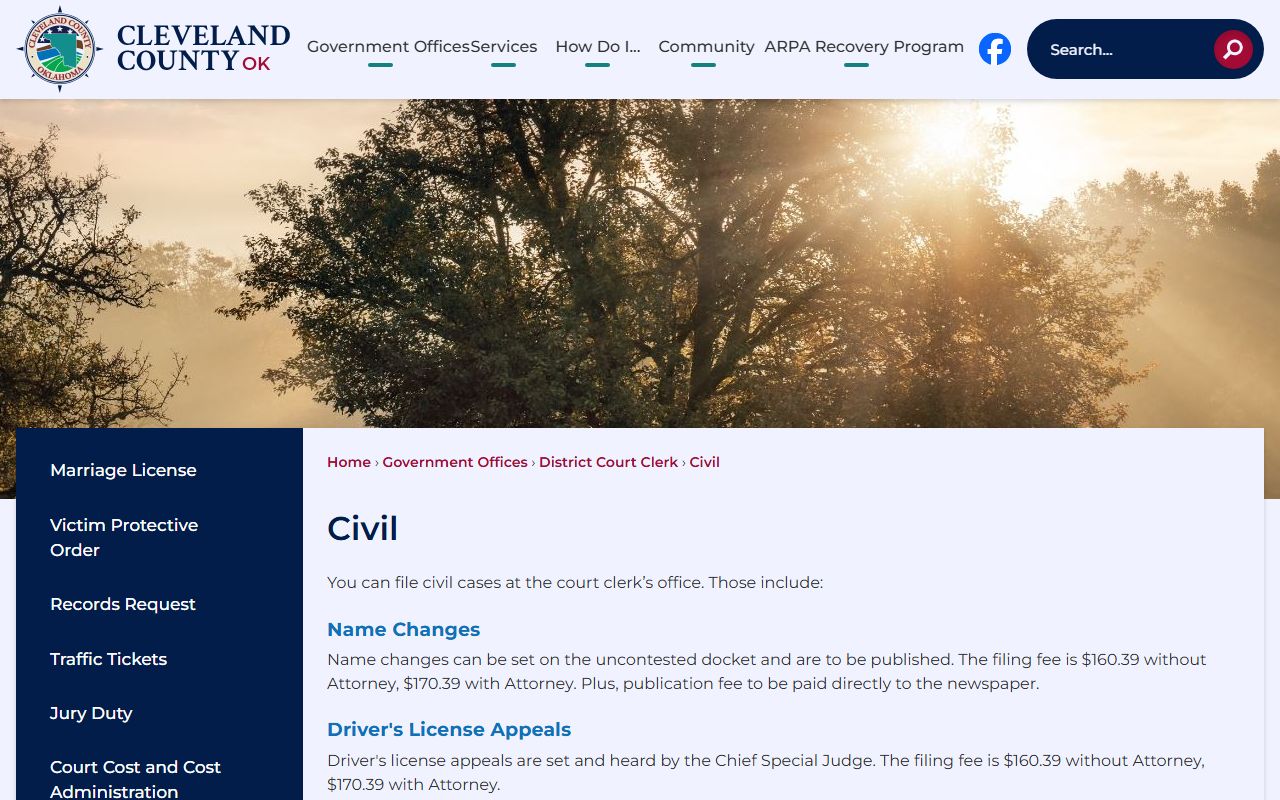
The Court Clerk Civil page covers civil filings and order packets.
A bulk document request may carry a fee and take longer than a single-document request.
Computerized Records History
The Court Clerk page gives a useful timeline for older records. Civil, domestic, and criminal cases were computerized in 1989. Probate and confidential cases were added in 1997. All records are now on computer, while records before those dates were kept in written docket books.
This matters when you research an old case. For a civil, domestic, or criminal case before 1989, or a probate or confidential case before 1997, you may need to give the clerk more detail and rely on the written books. Provide names, an approximate year, and the case type so staff can search.
The split also explains why an online search can come up empty for an old matter. The absence of a case on OSCN does not always mean no case exists. It can mean the record predates computerization and lives only in the books. In that situation, an in-person visit or a detailed written request to the clerk is the better route than a name search alone.
Transcripts and Court Reporters
The Court Clerk does not release court transcripts. Under District 21 rules, transcripts are purchased through the court reporter. So a transcript request is different from a record-copy request, and it goes to a different place.
To get a transcript, contact the office of the judge who heard the case. The judge's office can point you to the court reporter who can prepare and sell the transcript. The clerk can give you the case number and judge from the docket, but it cannot produce the transcript itself.
This trips up many people, because a docket can look like a full account of what was said in court. It is not. A docket logs events and filings, while a transcript is the word-for-word record a court reporter takes. If you need exactly what was said at a hearing, the transcript is the document to order, and the judge's office is the place to start.
Protective Orders and Civil Filings
The Court Clerk handles victim protective order filings. A request begins by filing a petition with the clerk, and the office notes same-day hearing rules for emergency protective orders. The Sheriff's Office will not research or try to locate the respondent beyond the information a petitioner provides, so complete service details matter.
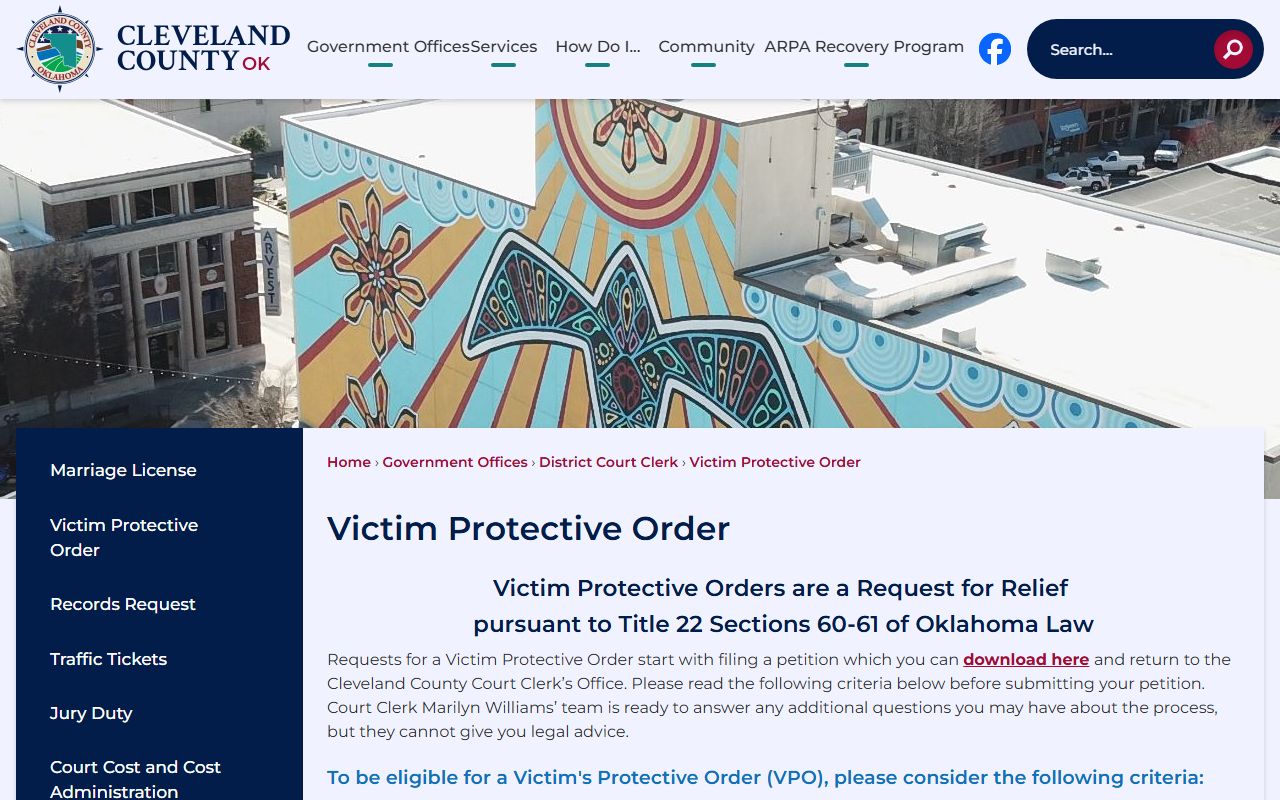
The Victim Protective Order page explains the filing process.
For active warrants tied to a case, see warrant records, and for self-help forms, see self-help and legal aid.
Fraud Alert: Jury Duty Scam
The Court Clerk has warned of a scam. Callers claim a person missed jury duty and demand payment, often posing as a detective or an officer. The clerk will not call to collect money this way.
Important: Never pay a caller who claims you owe money for missed jury duty, and hang up and call the court directly to verify any jury-duty claim.
If you get such a call, do not give money or personal details. Contact the Court Clerk's office to check on any real jury matter. A real jury summons comes by mail and gives instructions in writing, and the court does not take jury payments by phone, gift card, or wire transfer. When in doubt, hang up and call the listed clerk number yourself rather than any number the caller gives you.
Contact the Cleveland County Court Clerk
The Court Clerk's office sits in the courthouse complex in downtown Norman. In-person requesters enter through the west door at 201 S. Jones Ave., and the records counter is on the first floor, 1E or east, up half a flight of stairs.
Cleveland County District Court Clerk
200 S. Peters Ave.
Norman, OK 73069
405-321-6402
Mon-Fri, 8:00 a.m. to 5:00 p.m.
For land and county records, the separate County Clerk is the right office. For court searches and dockets, see court records and court dockets.