
Cleveland County District Court Overview
Oklahoma uses District Courts as its main trial courts, and the Cleveland County District Court is the local one. It sits in the courthouse complex in downtown Norman. Almost every kind of public case record in the county routes through this court and its elected Court Clerk, from criminal charges to divorces to probate.
The court is not divided into separate county courts at law, justice courts, or a separate probate court, as some other states do. Instead, the District Court handles the full range of trial matters, with special judges and divisions inside it. To search a case, use the OSCN Cleveland County docket search and pick the District Court.
Cleveland County is one of Oklahoma's larger and faster-growing counties, taking in Norman, part of south Oklahoma City, Moore, Noble, and Lexington. That size brings a heavy and varied caseload through the District Court, which is one reason the office computerized its records decades ago and now puts most dockets online for free public access.
Oklahoma Judicial District 21
Cleveland County is part of Judicial District 21. The district also covers Garvin County and McClain County. Judges are assigned across the district, and assignments can change over time. So the current judge on a case is best confirmed through the docket or the state judicial directory rather than an old list.
The district structure matters for one practical reason. The same District Attorney's office serves all three counties in District 21. So a Cleveland County criminal case is prosecuted by the District 21 District Attorney. For that office, see the District Attorney page.
The three counties still keep separate dockets. A case filed in Cleveland County stays in the Cleveland County District Court records, not Garvin or McClain. So when you search, set the court to Cleveland County District Court, and if you cannot find a case, check whether it was actually filed in one of the other District 21 counties or in a city municipal court.
Court Hierarchy and Appeals
Oklahoma splits its top courts in an unusual way. The Oklahoma Supreme Court is the court of last resort for civil cases and oversees the judiciary. The Oklahoma Court of Criminal Appeals is the court of last resort for criminal cases. The Court of Civil Appeals is a middle court that takes civil appeals assigned by the Supreme Court.
Case flow: Cleveland County District Court › Court of Civil Appeals or Court of Criminal Appeals › Oklahoma Supreme Court or Court of Criminal Appeals
| Court | Role | Handles |
|---|---|---|
| Cleveland County District Court | Trial court | Civil, criminal, family, probate, small claims, traffic |
| Municipal Courts | City courts | Ordinance and city traffic citations |
| Court of Civil Appeals | Middle appeals | Civil appeals assigned by the Supreme Court |
| Court of Criminal Appeals | Last word, criminal | Criminal appeals |
| Oklahoma Supreme Court | Last word, civil | Civil appeals and judicial oversight |
So a criminal appeal and a civil appeal travel different paths to the top. A Cleveland County case does not appeal to another county court.
Civil and Criminal Jurisdiction
The District Court hears both civil and criminal matters. On the civil side, it takes cases for relief under and over $10,000, plus civil miscellaneous and administrative matters. On the criminal side, it handles felonies, misdemeanors, and related criminal categories, with the District Attorney prosecuting on behalf of the State.
Each case carries a letter prefix that signals its type. A felony is CF, a misdemeanor is CM, and a civil case is CJ. These prefixes show up in the case number and help you set the right case type when you search. For the full list and how to read a file, see court records.
The civil and criminal sides serve different purposes. A civil case resolves a dispute between private parties, such as a contract claim, a property matter, or a name change, and the result is usually money or an order. A criminal case is brought by the State against a defendant, and the result can be a fine, probation, or jail. The District Court hears both, but the rules, the burden of proof, and the parties differ between them.
Domestic, Probate, Juvenile, and Small Claims
The District Court also handles the matters that touch families and estates. Domestic Relations covers marriage, divorce, paternity, and protective orders. Probate covers wills, estates, guardianships, and trusts. The Juvenile division handles youth matters with limited public access. Small Claims covers money claims under $10,000 and evictions.
- Family and divorce cases, with an FD prefix.
- Probate cases, with a PB or PROB prefix.
- Protective orders, with a PO prefix.
- Small claims, with an SC prefix.
For deeper coverage, see marriage and divorce records and probate records.
Special Judges and Court Divisions
Within the District Court, the work is shared among district judges and special judges. A special judge often handles certain dockets, such as small claims, traffic, arraignments, or family matters, depending on assignment. This keeps the court moving across its heavy mix of cases.
The divisions you see in the Court Clerk's office mirror this. Civil, criminal, juvenile, domestic relations, and small claims each have their own staff and records flow. So when you describe a case, naming the division and the case type helps staff point you to the right place. Because assignments shift, the docket itself is the best source for the current judge on a case, rather than a static list that may be out of date.
District Court Versus Municipal Court
People often mix up the District Court with a city municipal court. They are different, and the difference decides where a case lives and where you search for it.
| Point | District Court | Municipal Court |
|---|---|---|
| Level | County trial court | City court |
| Handles | State crimes, civil, family, probate, District Court traffic | City ordinance and city traffic tickets |
| Search | OSCN Cleveland County | The city court directly |
| Cities | Countywide | Norman, Moore, Noble, Lexington |
OSCN's traffic citation search states it does not search municipal citations. So a city ticket goes to that city court, while a District Court ticket is on OSCN. See traffic court records for the split.
Court and Courthouse Locations
The District Court and its Court Clerk share the courthouse complex in downtown Norman. The Court Clerk mailing address is 200 S. Peters Ave., and the public entry is the west door at 201 S. Jones Ave. The Court Clerk counter is on the first floor, 1E or east, up half a flight of stairs.
Cleveland County District Court
Court Clerk: 200 S. Peters Ave.
Complex entry: 201 S. Jones Ave.
Norman, OK 73069
405-321-6402
For certified copies and the records request form, see the District Court Clerk page.
ADA Accommodation
The District Court offers an ADA accommodation request for people who need a disability accommodation to take part in court or to reach the records counter. The county's ADA page identifies Deputy Court Clerk Julie Tipton as the ADA coordinator and links a request form.
Plan ahead if you need an accommodation, since a request may take time to arrange. The ADA process is run through the District Court, so the Court Clerk's office is the right contact to start it.
Federal Courts and Appeals
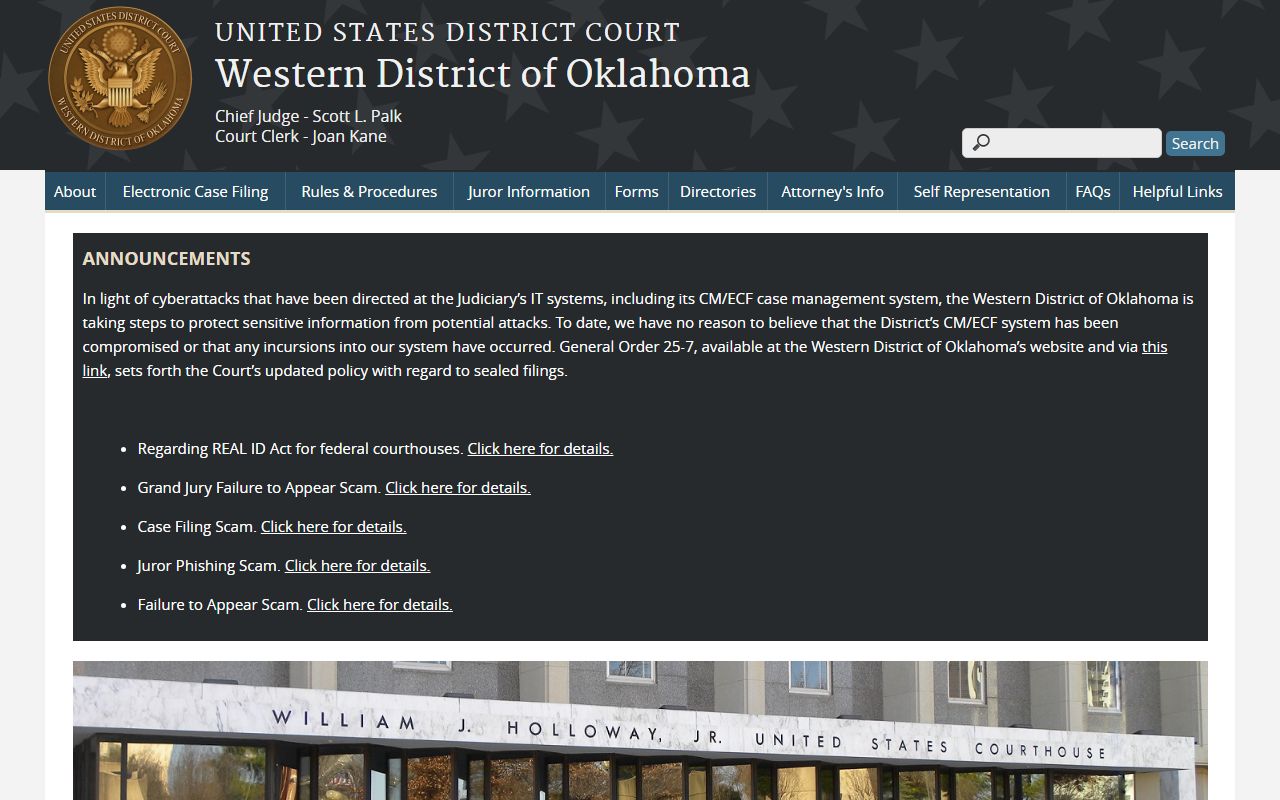
Some matters from Cleveland County belong in federal court, not the District Court. Federal crimes, federal-question civil cases, and certain diversity cases go to the U.S. District Court for the Western District of Oklahoma. Federal records are not on OSCN, so federal research uses different tools.
The U.S. District Court for the Western District of Oklahoma is the trial-level federal court for this area.
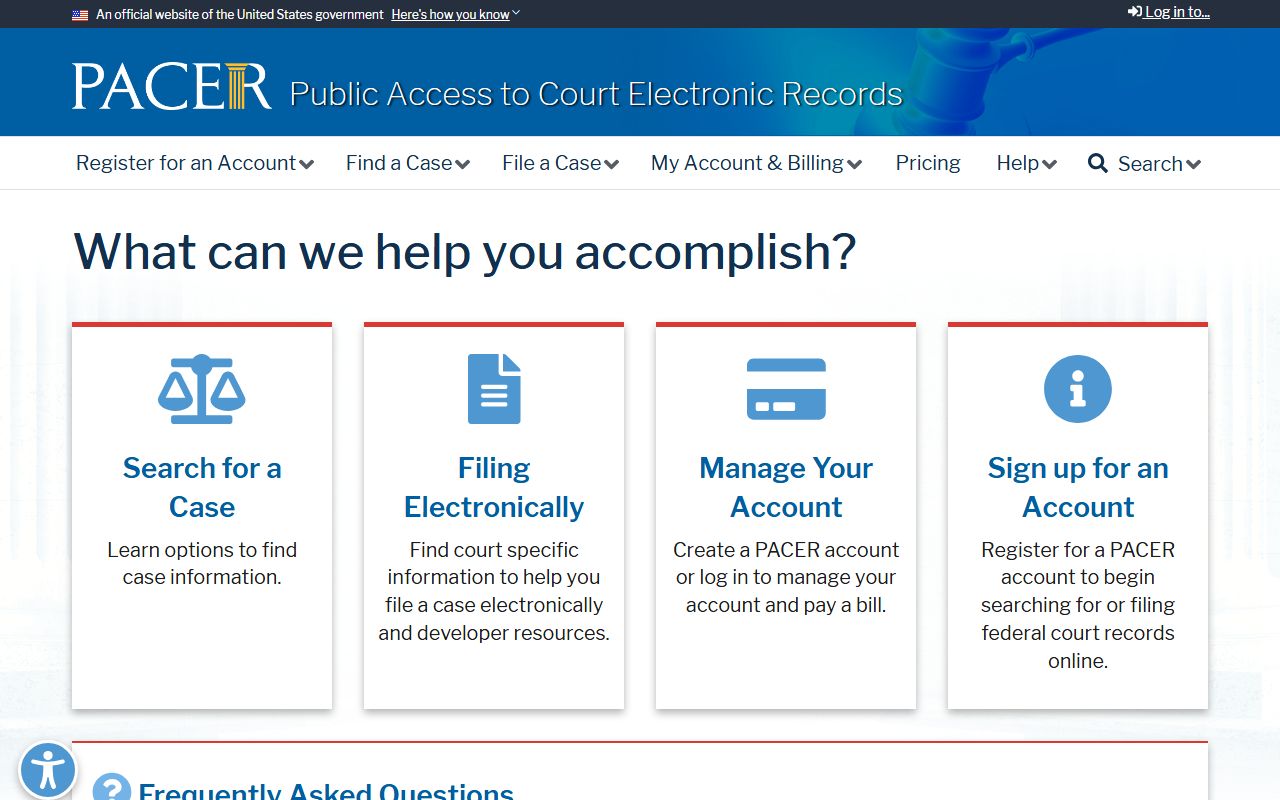
Federal court documents are searched through PACER, which requires registration and charges fees for most document access.
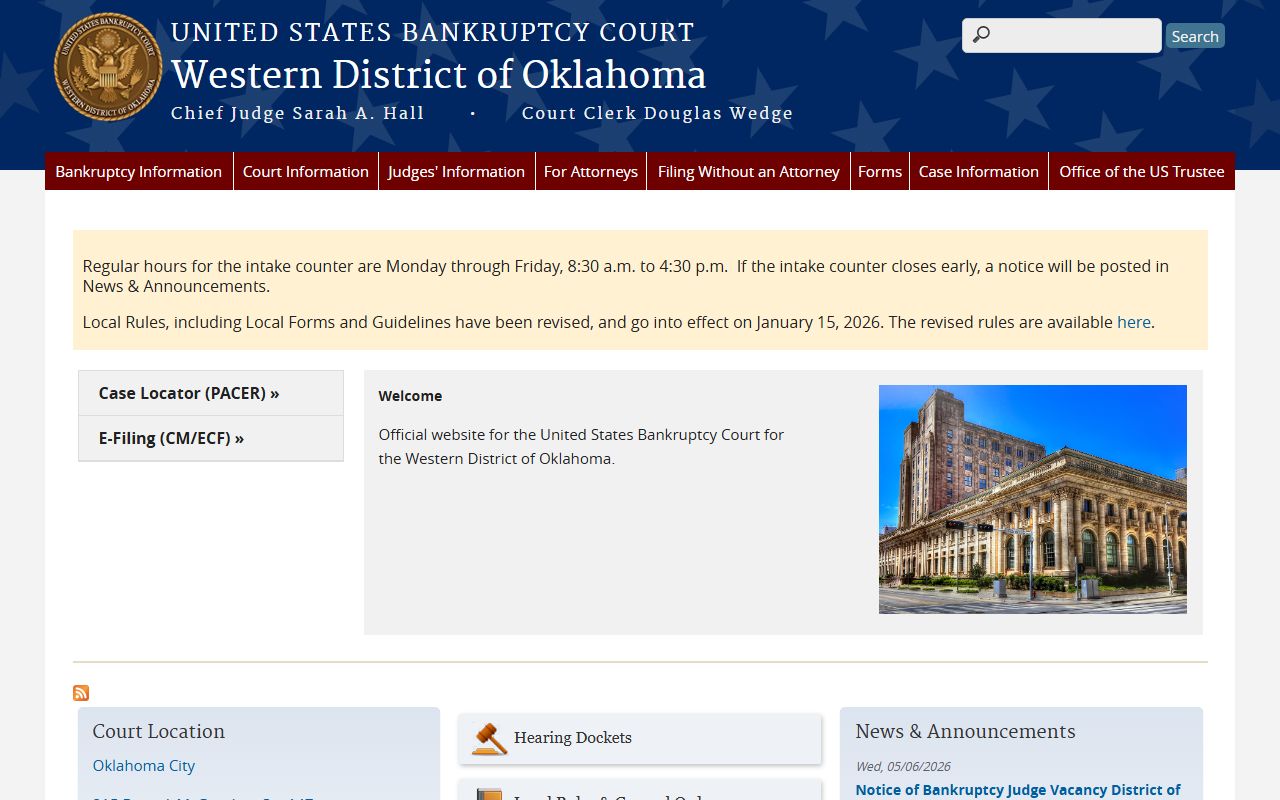
Bankruptcy is its own track. Those cases are handled by the U.S. Bankruptcy Court for the Western District of Oklahoma.
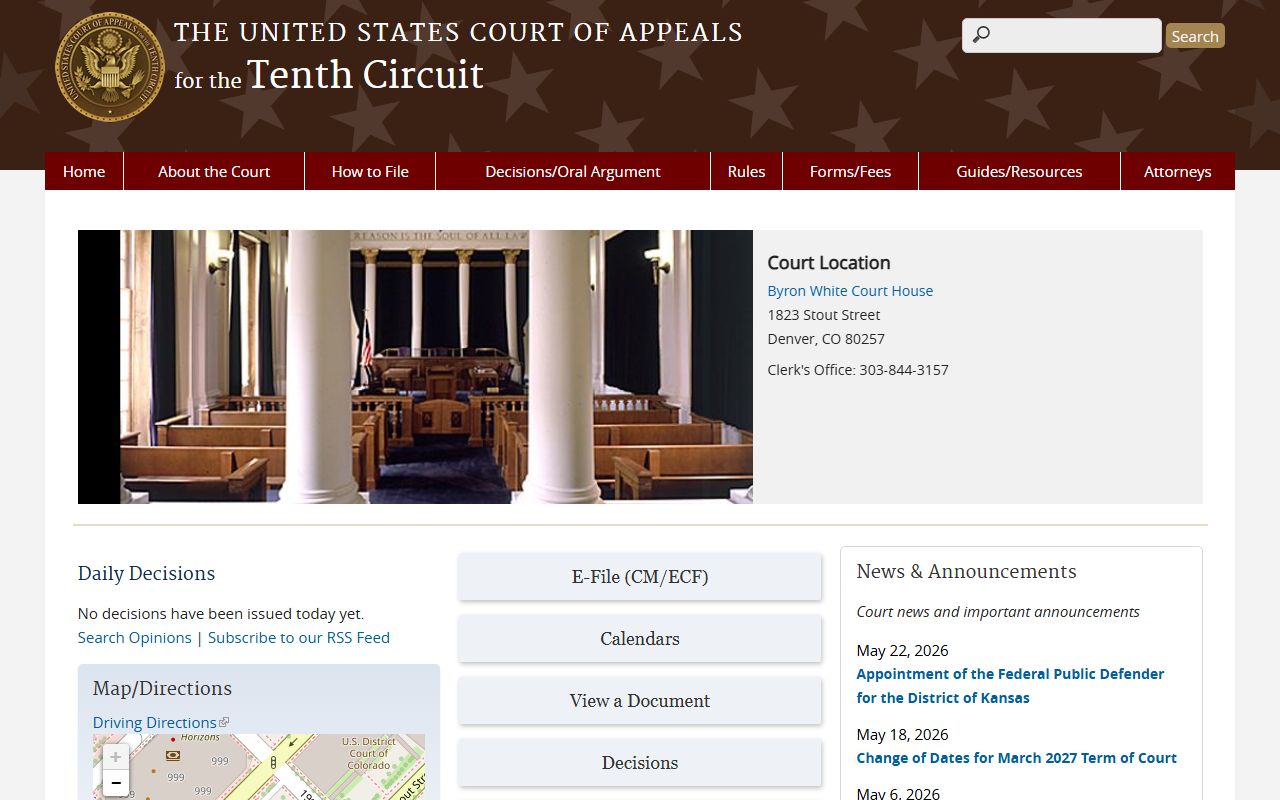
Appeals from the Western District go to the U.S. Court of Appeals for the Tenth Circuit.
For free federal docket and opinion research, CourtListener is a useful alternative to paid access.
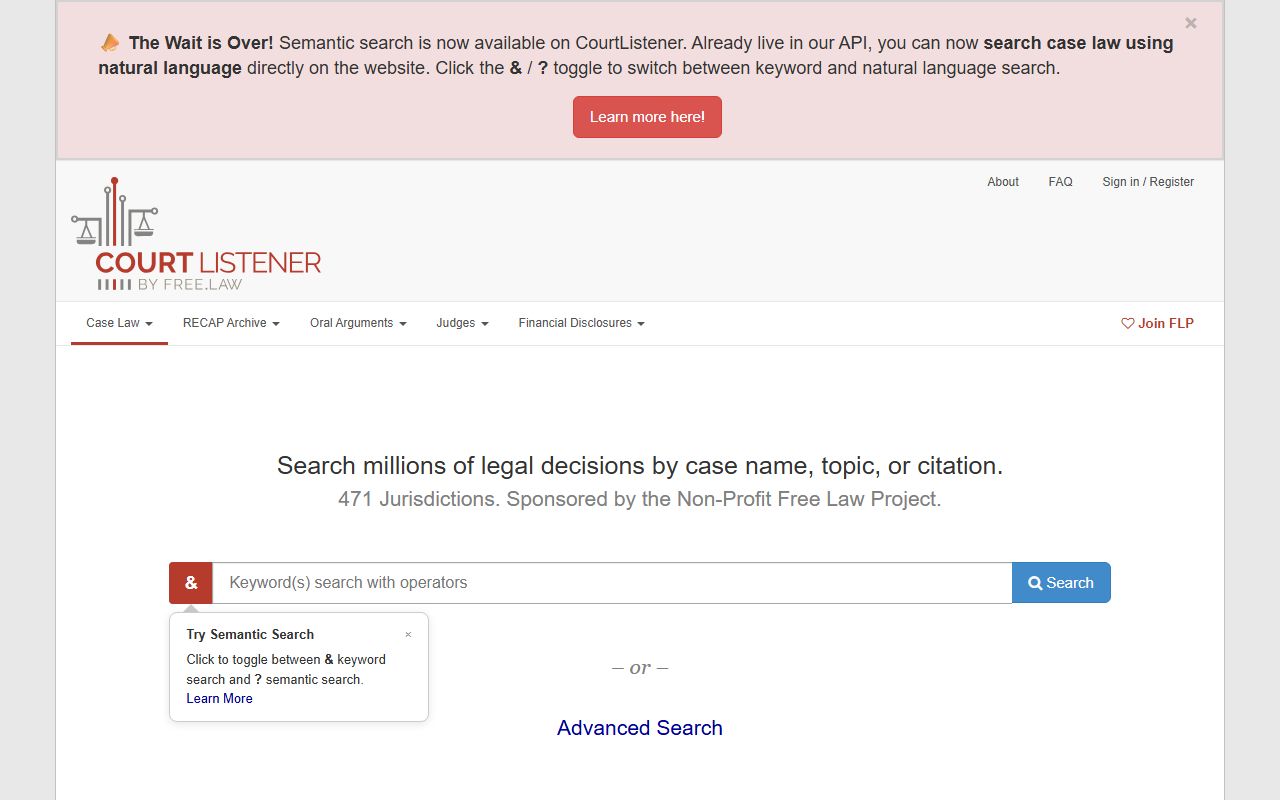
So a Cleveland County defendant with both state and federal matters may have state dockets on OSCN and federal dockets on PACER.
How a Case Moves Through the System
A case follows a path from filing to a possible appeal. The District Court is the trial level, where evidence is heard and a judge or jury decides. After a final decision, a party may appeal to the right appellate court.
The short version looks like this. A case is filed in the Cleveland County District Court and assigned a number and a judge. The case is heard and decided at the trial level. A criminal appeal then goes to the Court of Criminal Appeals, while a civil appeal goes under the Supreme Court, often through the Court of Civil Appeals. For tracking the steps on a specific case, read the court dockets.