
Self-Help and Legal Aid in Cleveland County
Self-help means handling part or all of a case on your own, often with court forms and guides. Legal aid means free or low-cost help from a lawyer or an organization for people who qualify. Both have a place in Cleveland County, and the right choice depends on the case type and your income.
The first stop for most people is the right form and the right office. Court case help routes through the District Court Clerk, who provides forms and explains procedures. For the case search itself, use court records. For free guides and legal information, several Oklahoma groups serve the county.
Cleveland County is one of Oklahoma's larger counties, taking in Norman, part of south Oklahoma City, Moore, Noble, and Lexington, so a lot of people pass through its courts each year. Many of them face a case without a lawyer. That is why knowing the resources matters. The goal of this page is simple, to point you to the form, the office, or the organization that fits your situation, so you do not waste time at the wrong door.
Choosing Between Self-Help and a Lawyer
Not every case calls for the same approach. A simple, uncontested matter may be a good fit for self-help with court forms. A complex or contested case usually calls for a lawyer, even a brief consultation, because the stakes and the rules are higher.
A few signals point toward getting a lawyer. A criminal charge that could mean jail, a custody fight, a sizable estate, or a case where the other side has a lawyer all weigh in favor of counsel. For a criminal case, appointed counsel may be available if you qualify. For a civil case, legal aid may help if you meet the income rules, and a short paid consultation can still be worth it when free help is not available.
Self-help works best when you can follow instructions, meet deadlines, and handle your own paperwork. Even then, a one-time check with a lawyer on a key step can prevent a costly mistake.
Court Forms and Common Pro Se Tasks
Oklahoma publishes statewide court forms, and the Cleveland County Court Clerk lists local forms for common needs. A self-represented person, called a pro se litigant, can often start with these. The Court Clerk forms area includes a form to apply for a court-appointed attorney, a Marriage License Information Sheet, a Petition for Protective Order, and a private process server application.
- Search a case on OSCN before you file or respond.
- Request copies or certified copies from the Court Clerk.
- File a small claims or eviction-related document.
- File a protective order petition.
- Apply for a court-appointed attorney in a criminal case.
- Request an ADA accommodation through the District Court.
Statewide forms are posted on the Oklahoma court forms page at oscn.net. For the request form and fees, see the District Court Clerk page.
A form is only the start. After you file, you usually must serve the other party, meet deadlines, and show up for hearings. The clerk can tell you where and how to file, but the responsibility for the steps stays with you. Read each form's instructions carefully, keep copies of everything you file, and write down every court date so a missed step does not derail your case.
The Oklahoma Indigent Defense System
For a criminal case, a person who cannot afford a lawyer may qualify for appointed counsel. In most Oklahoma counties, including Cleveland County, the statewide agency is the Oklahoma Indigent Defense System, or OIDS. It provides trial, appellate, and post-conviction criminal defense to people the court finds entitled to counsel at state expense.
The OIDS homepage is the entry point for the agency.
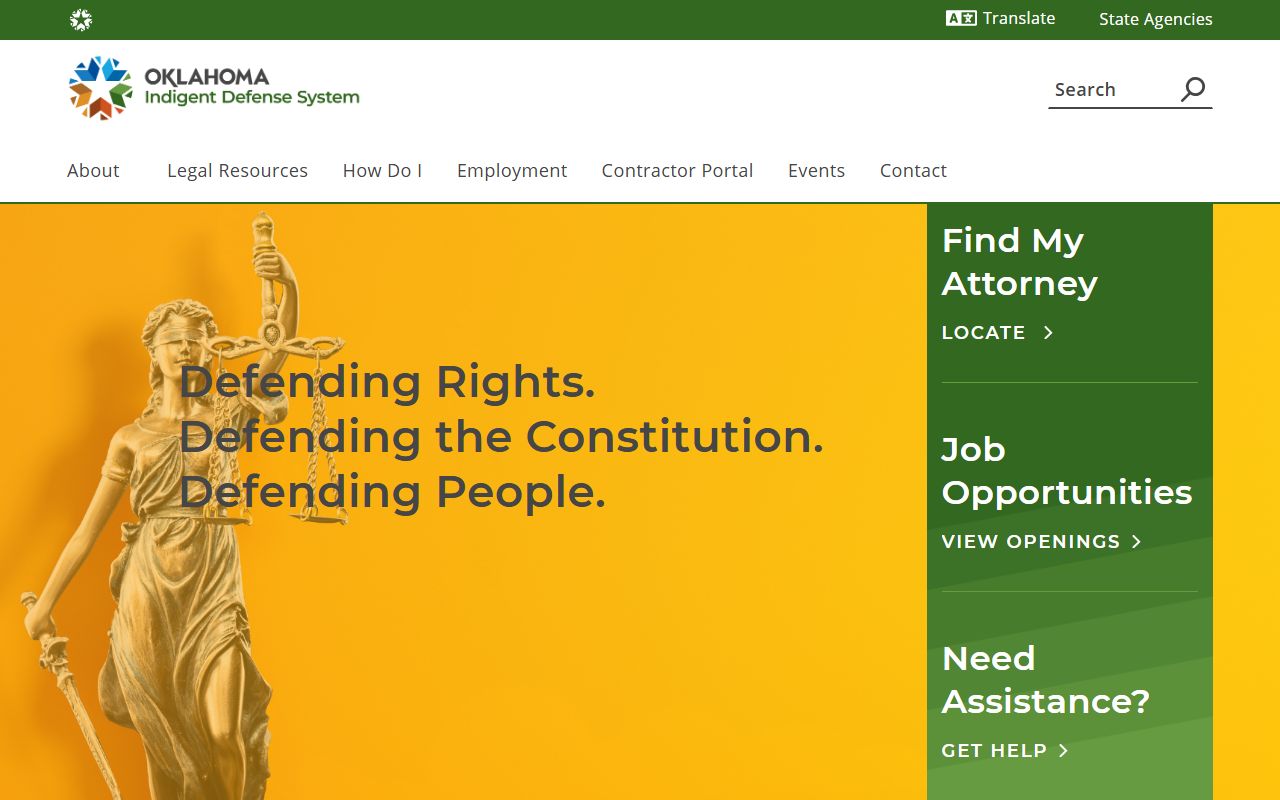
You can reach the agency through the OIDS homepage. A defendant does not self-appoint OIDS by calling. The court must find the person eligible, and the local starting point is the Court Clerk's application form.
What OIDS Covers and What It Does Not
OIDS represents adult and juvenile indigent defendants in most counties, with exceptions for Oklahoma and Tulsa Counties. It can be appointed in felony, misdemeanor, incarceration-punishable traffic, wildlife, and juvenile delinquency cases when a defendant qualifies. It also handles certain appeals and post-conviction matters.
The OIDS public guidance page explains the limits clearly.
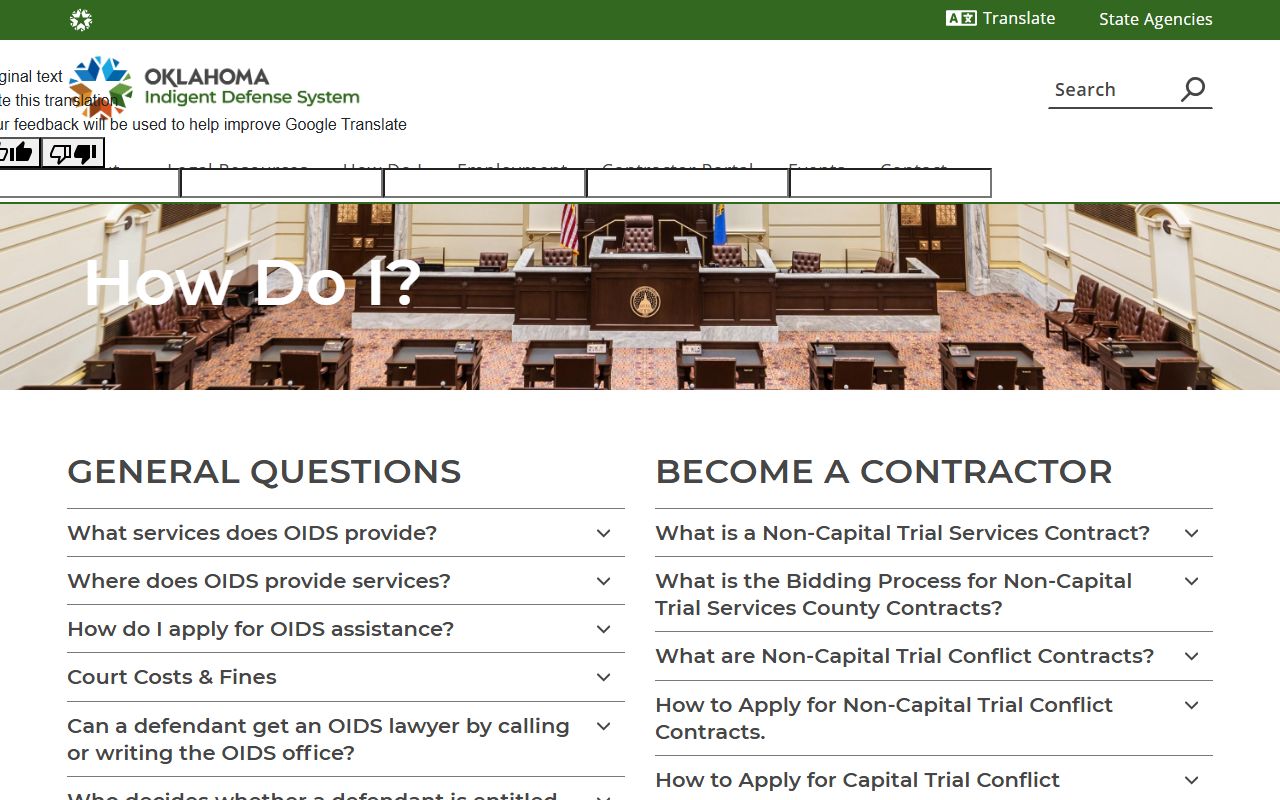
The OIDS guidance page states that OIDS does not handle civil cases. It directs civil litigants to Legal Aid Services of Oklahoma or the University of Oklahoma Law School Legal Aid Clinic. So divorce, custody, probate, small claims, and eviction parties need civil help, not OIDS.
Civil Legal Aid and Free Resources
Civil cases, such as family, housing, and consumer matters, have their own help. Legal Aid Services of Oklahoma takes eligible civil cases statewide, including in Cleveland County. The Oklahoma Bar Association posts public legal information, and OKLaw offers self-help guides written for Oklahoma.
- Legal Aid Services of Oklahoma for eligible civil cases.
- Oklahoma Bar public legal information for orientation.
- OKLaw for self-help guides and resources.
These groups set their own eligibility and intake rules, so check each one. For family matters, see marriage and divorce records, and for estates, see probate records.
Civil legal aid usually screens for income and case type. Common cases include eviction defense, family safety matters, public benefits, and consumer problems. If you do not qualify, the Bar Association can still point you to low-cost or referral options. The key is to ask early, since deadlines in a civil case do not pause while you look for help, and a missed deadline can cost you the case.
Victim and Witness Help
Victims of crime have a dedicated resource. The District 21 District Attorney runs a Victim and Witness Division that serves Cleveland, Garvin, and McClain Counties. It assists victims through the stages of the criminal justice system and can connect them to compensation and other resources.
The division can explain court settings, notification, restitution, and victim-impact participation. It also points victims to Oklahoma Crime Victims Compensation Assistance for qualifying expenses. For protective orders, the Court Clerk handles filings, with same-day rules for emergencies. See the District Attorney and District Court Clerk pages.
Victim help is free and separate from hiring your own lawyer. A victim who wants custody status updates can also register with VINELink. None of these replace calling law enforcement in an emergency, but together they give a victim support and information as a criminal case moves through the system.
Self-Help Form Topics
Certain forms come up again and again in Cleveland County. Knowing the common ones helps you ask for the right paper.
- Protective order petition.
- ADA accommodation request.
- Court-appointed attorney application.
- Marriage license information sheet.
- Private process server application.
- Statewide AOC forms for civil, family, probate, and small claims.
A fee waiver, sometimes called a pauper's affidavit, may be available for those who qualify. The exact local form was not posted in the source reviewed, so ask the Court Clerk. For public-records requests, see public records.
OIDS Coverage in Cleveland County
OIDS is a state agency with local coverage. Its agency overview states that the Cleveland County office provides legal services in the county and lists staff attorney coverage that includes Norman. So a qualifying Cleveland County defendant can be represented by the local OIDS office once the court appoints counsel.
The state agency profile describes the OIDS role and scope.
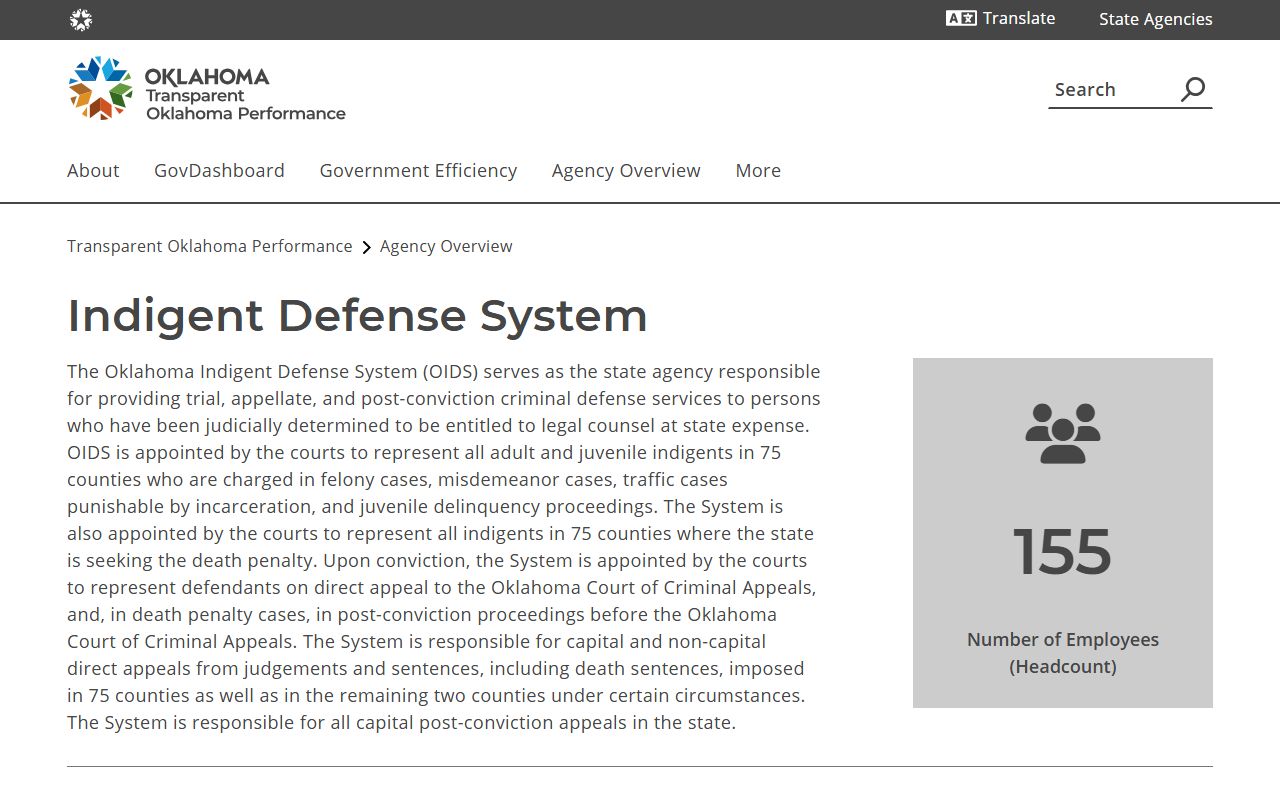
The OIDS state agency profile confirms the agency provides defense services to qualifying indigent defendants. Appeals after a conviction may also involve OIDS appellate representation when the case type qualifies.
What Court Staff Cannot Do
Self-help has limits, and it helps to know them before you rely on court staff. The Court Clerk and County Clerk can provide forms and explain procedures, but they cannot give legal advice. The marriage FAQ even notes the office cannot advise on annulment or common-law marriage questions.
Note: Court staff can explain how to file, but they cannot choose your claims, fill forms for you, predict an outcome, or tell you what to say in court.
A self-represented litigant is responsible for service, deadlines, hearings, evidence, and proposed orders. Court records show settings and deadlines, but a docket is not legal advice. For an emergency, use law enforcement or the emergency protective order process rather than waiting on a routine request. Knowing these limits up front helps you set realistic expectations and decide when a short talk with a lawyer is worth the cost.